 |
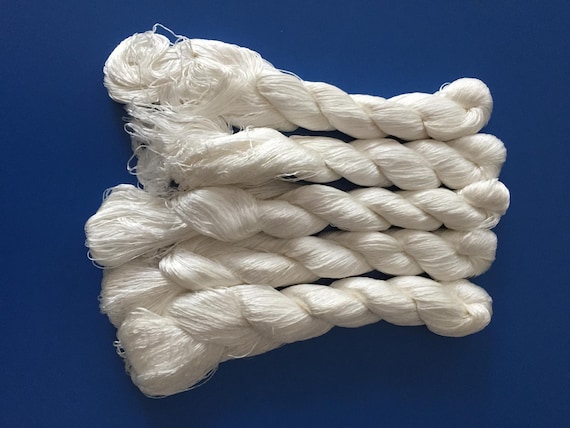
100% Silk embroidery thread- bare and ready to dye!
Source |
This summer I've been doing a huge amount of natural dyeing, all in preparation for a historical arts and sciences entry into a competition called the Queen's Pick Tournament. Basically it's for people who- like me- want to make an entry, aren't too sure of the complete historical accuracy of their project or haven't entered into an arts and science competition before. As I fit both these requirements and wanted a fun new project I decided to do natural dyeing of silk embroidery threads and then use them to make a semi-historical design. This post will cover the dyed threads and another (likely in a few months once I'm finished) will cover the embroidered piece.
I purchased my de-gummed silk from a Chinese company called Suzhou Embroidery through Etsy. The picture at the top is of the silk I bought. It was well packaged and was easy to work with despite being really fine because each skein was already divided into 20 smaller skeins and I took the time to place six figure-eight knotted strings through each small skein so it wouldn't tangle.
Across the top row from left to right: The variegated lavender is light Indigo over-dyed with Madder.
The coral pink is Madder lightly dyed. The golden-yellow is goldenrod. The copper is yellow onion skins.
On the bottom is from left to right: Phragmites tops when they reached full redness, with a couple pieces of copper pipe for a medium-dark green. Next to it is the blue-green that is light indigo over-dyed with the same phragmites and copper dye.
From Left to Right: Varigated moss is purple basil leaves with a baking soda rinse. Black-eyed susan followers for a chartreuse green. Sea-foam is Dyer's Chamomile over-dyed with light Indigo. Teal is also Dyer's Chamomile over-dyed with medium Indigo. Next is dark blue with multiple dips of Indigo, followed by a medium blue from Indigo also.
From Left to Right: More Indigo slightly lighter in shade, and again in the lightest concentration. The grey and navy variegated silk is from black beans. Next is a greyed purple from Logwood chips with steel/iron in the pot. Then charcoal an exhaust of the same Logwood chips and steel and the medium grey the final exhaust of Logwood chips and steel. Finally is greyed-lilac from purple basil leaves with a vinegar rinse.
From Left to Right: Burgundy from Madder with a baking soda rinse, followed by an Indigo over-dye. Then a dark concentration of Madder with a baking soda rinse for a crimson. Next is Madder exhausted once from the previous also rinsed in baking soda. The middle shade is Madder in pH neutral rinsed water. Next is Madder rinsed with vinegar creating a burnt-orange. Then Dyer's Chamomile over-dyed with Madder for a tangerine shade. Cutch is on the end for a tan shade.

Lastly again from Left to Right: Mullein leaves for a butter yellow shade, Dyer's chamomile for an almost cream yellow, Tiger Lily flowers for a cream shade, Greyed-pink from Rose of Sharon flowers, and finally a brown-pink from plum leaves and fruit skin.
Overall I'm really pleased with what I've accomplished, and I plan to do a few more shades though not for the project but rather in the future. I have some lichen I want to try as well as walnut hulls and avocado skins and pits. There is quite a range of natural colours out there and it's fun to see what plants can give you.


